
 English (NG)
 English
 Español
 Русский
 Português
 Bahasa Indonesia
 اردو
اردو বাংলা
বাংলা Español (MX)
 Tiếng Việt
 日本語
日本語 한국어
한국어 العربية
 Bahasa Melayu
 English (SG)
 Filipino
 ไทย
ไทย
Differences Between Two-Piece Cans And Three-Piece Cans: A Complete Guide
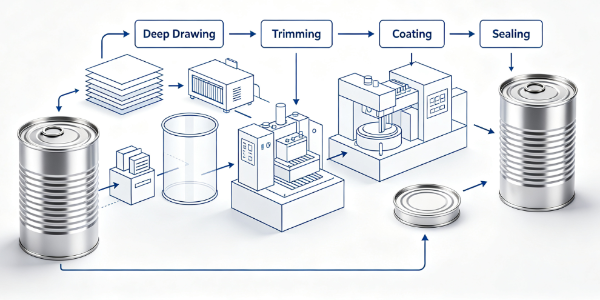
Two-piece cans and three-piece cans are the two mainstream metal packaging solutions in the global food and pet food packaging industry. Both are made of food-grade tinplate materials, supporting airtight sealing, custom printing, and various easy-open end options. However, they differ significantly in structural design, manufacturing technology, performance characteristics, application scenarios, and production costs.
For food manufacturers, pet food brands, and packaging purchasers, understanding the core differences between two-piece cans and three-piece cans is essential to selecting the most cost-effective, safe, and suitable metal packaging for canned meat, seafood, fruits, vegetables, and wet pet food products. This guide elaborates on their key distinctions, advantages, disadvantages, and applicable usage scenarios to help you make an optimal packaging decision.
1. Core Structural & Manufacturing Differences
Two-Piece Cans
A two-piece can is composed of only two components: an integrated can body with a bottom and a separate can lid. It is manufactured through a one-piece deep drawing process, forming a completely seamless can body from a single tinplate sheet without any welded side seams. After product filling, the top lid is double-sealed to complete the packaging.
The integrated moulding structure eliminates structural weak points, delivering excellent overall tightness and integrity. The production process is simple, highly automated, and suitable for high-speed continuous production lines, which is why it is widely used in standardised small and medium-sized food packaging.
Three-Piece Cans
A three-piece can consists of three independent parts: a rolled and welded can body, a bottom end, and a top lid. The can body is formed by rolling tinplate into a cylinder and welding the side seam, then mechanically seaming the top and bottom ends to form a complete container.
With a classic and mature manufacturing process that has been optimised for over a century, three-piece cans feature flexible size adjustment. Manufacturers can freely customise cans of different heights and diameters, including straight-wall and necked-in designs, with extremely high material utilisation and flexible production switching.
2. Performance & Sealing Advantages Comparison
Two-Piece Can Performance
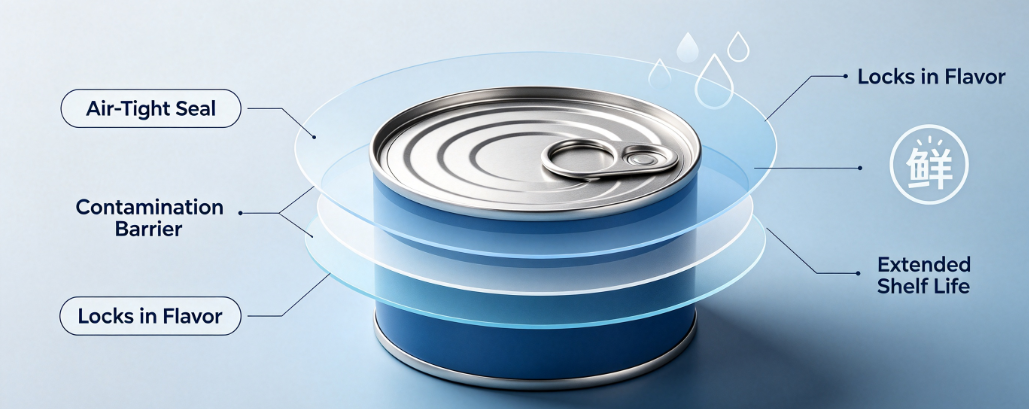
Thanks to the seamless one-piece structure, two-piece cans achieve superior airtight and leak-proof performance. There is no risk of seam cracking, liquid leakage, or corrosion at welding joints, effectively isolating air, moisture, and external contaminants. This stable sealing performance perfectly locks in food freshness, flavour, and nutritional value, greatly extending the shelf life of wet pet food, tuna, sardines, and ready-to-eat canned food.
In addition, two-piece cans have a smooth and uniform surface without seam protrusions, supporting high-precision custom printing and presenting a more premium retail display effect.
Three-Piece Can Performance
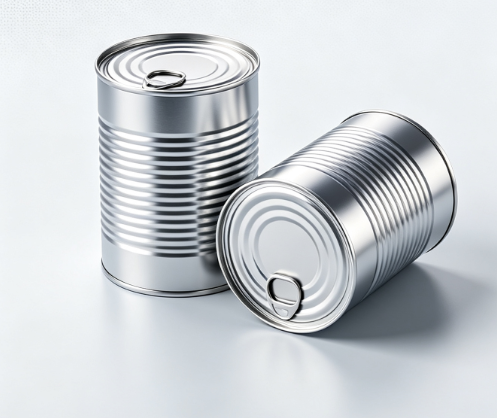
Three-piece cans have excellent structural rigidity and pressure resistance, with stable overall performance after professional welding and double-sealing treatment. Although there is a welded side seam, modern precision welding technology ensures tight seam integration with no leakage risks under normal storage and transportation conditions.
The biggest performance advantage of three-piece cans is strong structural adaptability. They can be made into large-size, ultra-high, or special-shaped cans that two-piece cans cannot achieve, perfectly matching the packaging needs of large-capacity canned fruits, vegetables, soups, and bulk food products.
3. Application Scenarios & Suitable Products
Best Applications for Two-Piece Cans
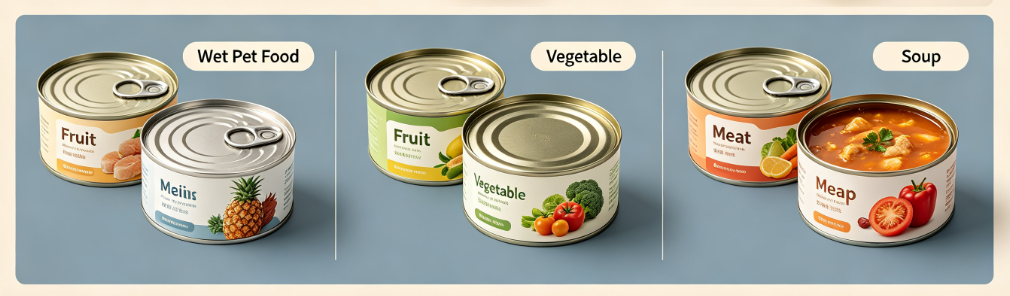
Two-piece cans are ideal for standardized, small to medium-capacity canned products with high requirements for leak-proof and fresh-keeping performance. Common applications include:
•Wet pet food (dog and cat wet food cans)
•Seafood cans (sardine, tuna, pilchard)
•Small-portioned ready-to-eat canned meat
•High-standard fresh-keeping canned snacks
•They are compatible with full-aperture easy-open ends, stay-on tab ends, and various food-grade interior lacquers, fully meeting international food safety standards.
Best Applications for Three-Piece Cans
Three-piece cans are the preferred choice for multi-specification, large-capacity, and customized food packaging, widely used in:
•Large-size canned fruits, vegetables, and canned soups
•Bulk canned meat and agricultural food products
•Custom special-specification food packaging
•Industrial and wholesale food packaging
•They support diverse exterior treatments such as ribbed patterns, gold lacquer finishes, and offset printing, with richer personalized customization options.
4. Cost & Production Flexibility Analysis
Two-piece cans feature high automation efficiency and low unit cost for mass standardized production, making them cost-effective for large-batch fixed-specification orders. However, their mold adjustment cost is high, and it is not suitable for small-batch, multi-specification customized production.
Three-piece cans have flexible production processes with low threshold for specification adjustment. They can quickly switch between different sizes and styles, with outstanding cost advantages in small-batch, multi-variety, and customized orders. For large-size cans, three-piece technology also has more obvious cost and technical advantages.
5. How to Choose Between Two-Piece and Three-Piece Cans?
•Choose two-piece cans if you need seamless leak-proof performance, high-standard fresh-keeping packaging, standardized small and medium sizes, and large-batch automated production for wet pet food and seafood cans.
•Choose three-piece cans if you need diversified sizes, large-capacity packaging, personalized printing and surface treatment, or flexible small-batch customized food packaging solutions.
Conclusion
Two-piece cans and three-piece cans have their unique strengths and applicable scenarios in food packaging. Two-piece cans excel in seamless integrity, leak-proof performance, and mass production efficiency, focusing on high-standard fresh-keeping packaging for pet food and seafood. Three-piece cans stand out in structural flexibility, size diversity, and customized capabilities, catering to large-capacity and personalized food packaging needs.
As a professional manufacturer of food-grade tinplate cans, we provide full-series two-piece and three-piece cans with complete specifications, customizable printing, coating, and matching easy-open end solutions, supporting global food and pet food packaging wholesale and customization.